How Do Kiosk Ads Compare to Social Media Advertising?
Brands have more ways to reach people than ever. Social media advertising works through personal devices and data-driven targeting - it meets people wherever they're scrolling. Digital kiosk advertising does something else entirely: it meets people in physical spaces, mid-shop, mid-commute, mid-decision.
Trying to build real-world visibility? A well-planned digital kiosk display strategy is a genuinely strong way to show up at exactly the moments that matter in someone's day. Understanding what separates these two channels is really what helps a brand land on the right mix.
Kiosk Advertising vs. Social Media Advertising: The Core Difference
Comes down to where people actually run into the ad. Social ads live in digital feeds - Instagram, Facebook, TikTok - targeted by demographics, interests, online behavior, location.
Kiosk advertising, digital or static, sits somewhere else entirely - malls, airports, retail spaces, transit hubs, entertainment venues, commercial complexes. Instead of fighting for attention on a personal screen, it just becomes part of the space someone's already standing in. Exactly why digital kiosk advertising works so well for brands chasing location-based visibility and real engagement, not just impressions.
1. Physical Reach vs. Digital Reach
Social media advertising reaches very specific audiences across cities, regions, whole countries even. Its strength is scale plus precision.
Kiosk advertising runs on physical foot traffic instead. A well-placed digital kiosk display generates repeat exposure across the day, especially where people naturally linger. Targeting local customers, shoppers, travelers, visitors? This physical presence works alongside online campaigns, not against them.
2. Visibility and Attention
A social ad competes with an endless scroll - posts, videos, notifications, everything at once. Swiped past in under a second, most of the time.
A well-designed digital kiosk display doesn't have that problem. Bright visuals, motion graphics, scheduled content, interactive features - all of it pulls attention within the actual space around it. Eye level, high-traffic spot - the message becomes part of someone's surroundings instead of one more thing fighting for a thumb-swipe.
3. Targeting and Interactivity
Social media wins clearly on data-driven targeting. Detailed audience segments, tracked impressions, clicks, conversions, cost per click - the usual toolkit.
Modern digital kiosk advertising does something different: contextual targeting. Content scheduled around location, time of day, promotions, events, whatever the campaign needs. Touchscreens, QR codes, product info, directories - interactive units turn the kiosk from a passive surface into something people can actually engage with.
4. Flexibility and Content Management
Both channels flex well. Social campaigns get edited, paused, tweaked, optimized, almost instantly.
Digital kiosks support remote updates too. Swap the message, run something seasonal, push a limited-time offer, rotate creatives through the day - none of it touching a physical asset. That's exactly what makes kiosk advertising so useful in retail and commercial spaces where messaging can't afford to go stale.
5. Which One Delivers Better Results?
No clean winner here - the two aren't really doing the same job. Social media advertising is strong on precise targeting, measurable engagement, conversion-focused campaigns. Kiosk advertising wins on physical visibility, contextual messaging, location-based exposure.
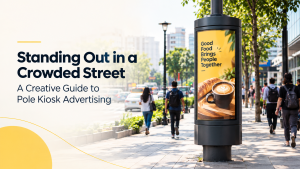
Investing in indoor and outdoor advertising? A specialized pole kiosk advertising agency helps pin down the right locations, formats, creative approaches, audience touchpoints. Planned alongside digital campaigns, kiosk advertising reinforces the same message by putting the brand physically in front of people, right in the environments that matter.
Creating a Stronger Omnichannel Strategy
Usually the smarter move isn't picking one over the other - it's using both, deliberately. A social campaign builds awareness before someone ever sets foot in a mall, airport, retail space. A well-placed kiosk reinforces that same message once they're actually there.
QR codes, promotional offers, product information, location-based calls to action - together, a smooth handoff between online and offline. Keeps brands in front of consumers across both digital and physical touchpoints, no hard break in between.
Conclusion
Kiosk advertising and social media advertising are not really competing - they complement each other. Social media brings precise digital targeting and detailed analytics; digital kiosk advertising brings physical visibility in high-traffic spaces, putting brands in front of people right where decisions actually happen.
Chasing stronger real-world visibility? Pairing digital reach with strategically placed kiosk advertising makes for a more connected, more memorable customer journey. Working with an experienced pole kiosk advertising agency like Zero Degree helps businesses pick the right locations, build effective creative, and manage campaigns for real impact across South India.