>

Can India Catch Up? The Untapped Potential of 3D DOOH in Indian Cities

You are on your way to work and the train is late, again! The morning rush is in full swing and you somehow elbow your way out of the train station. The crowd around you is flowing like a river and everyone is in a hurry to get somewhere. Your mind is calculating how many seconds you have left before your boss calls you asking where you are.

And then –

Meeeooow.

It’s soft at first, but unmistakable. You turn, half-distracted, expecting a stray cat. But what you see next short-circuits your sense of logic.

You forget about your job, your boss and everything else because there is a gigantic cat on the side of a tall building!

Not a poster, not a cartoon – a giant, hyper-realistic, breathing, blinking cat, chilling in a digital box like it owns the space. It turns its head. Its fur catches the light. Its tail flicks lazily over the edge of the building like gravity doesn’t matter.

People stop. They stare. Phones go up. Time freezes.

Your brain is smart enough to remind you that it is some kind of a digital display but it can’t figure out why the cat is sticking out of the building… Why is it 3-dimensional!
Zero Degree

3D Billboards: The Game Changer in OOH Advertising

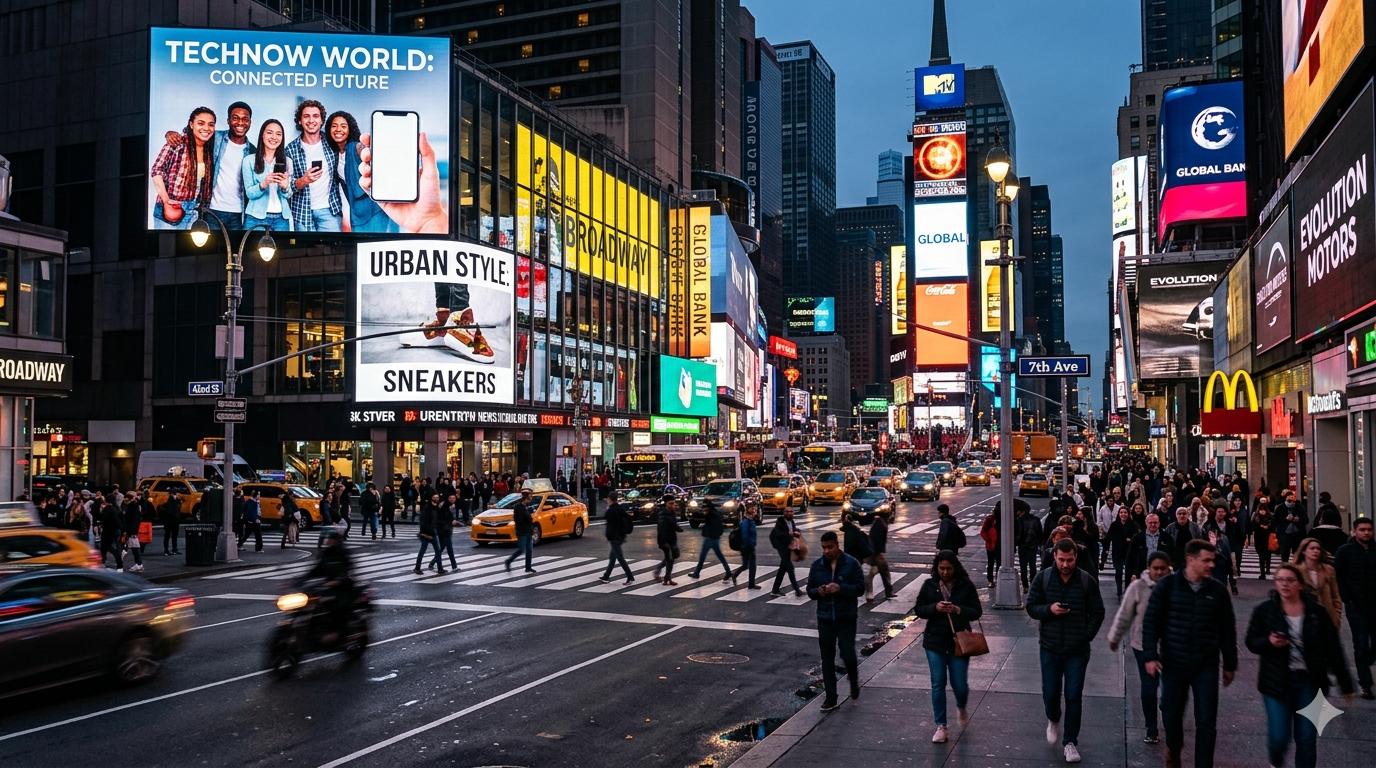
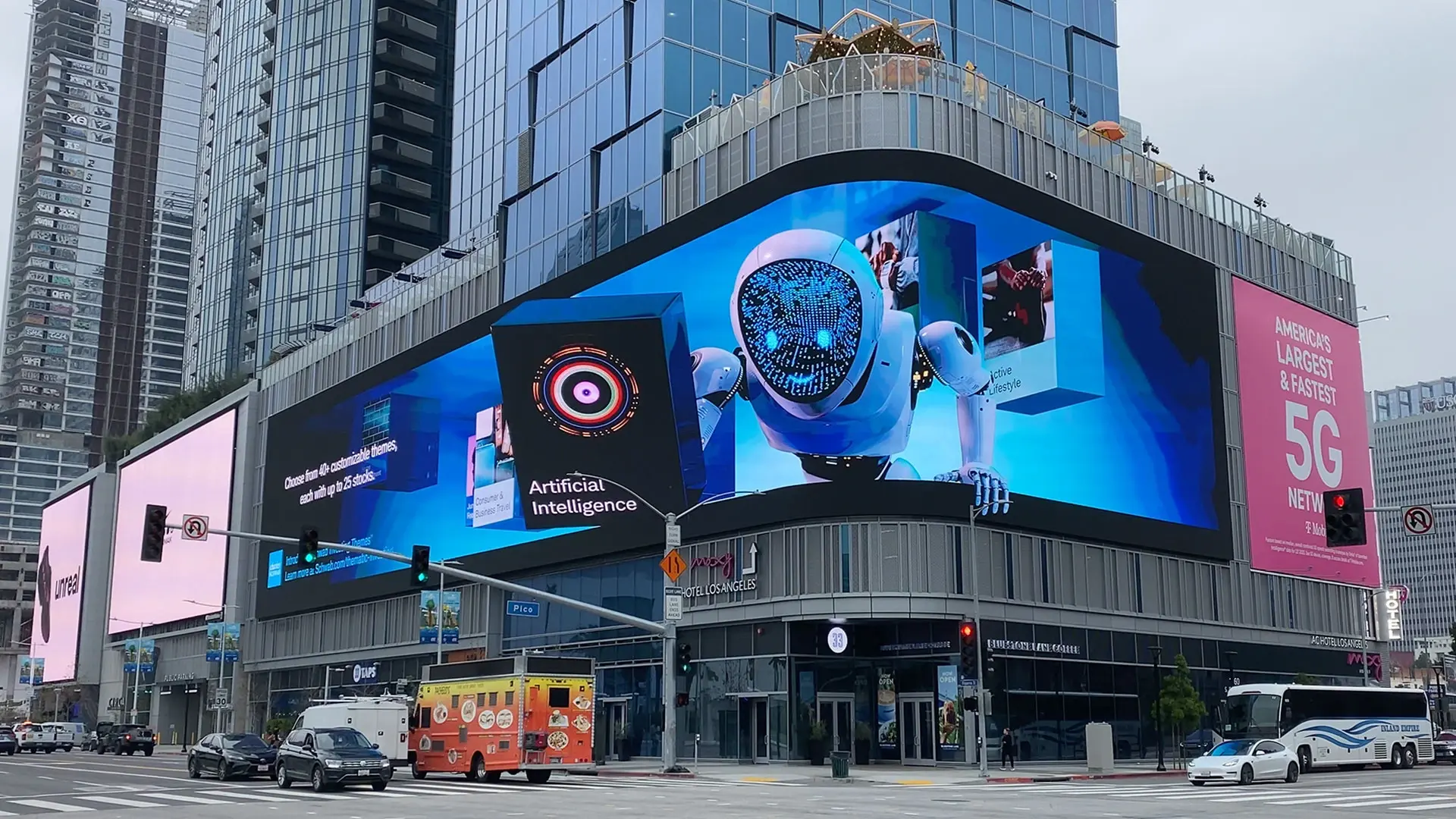
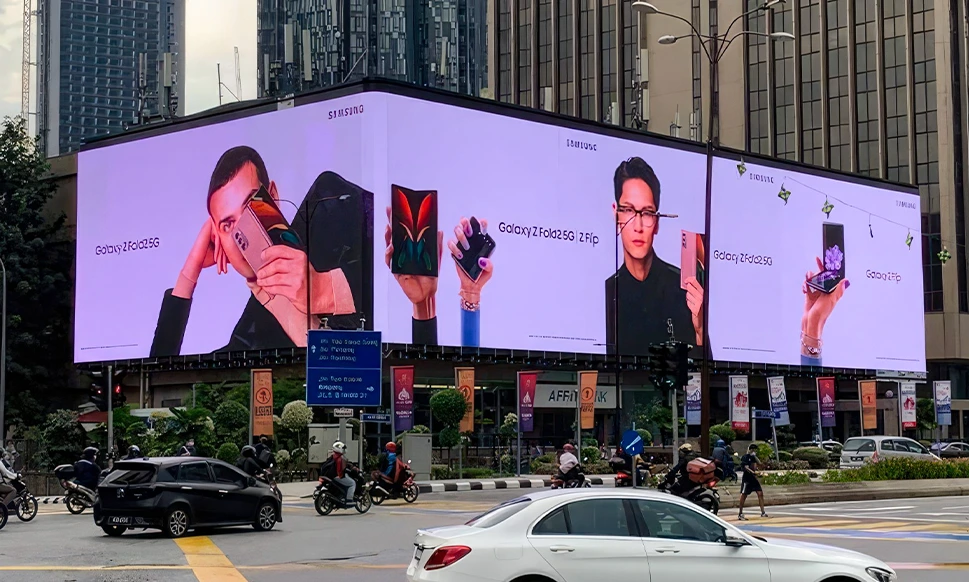
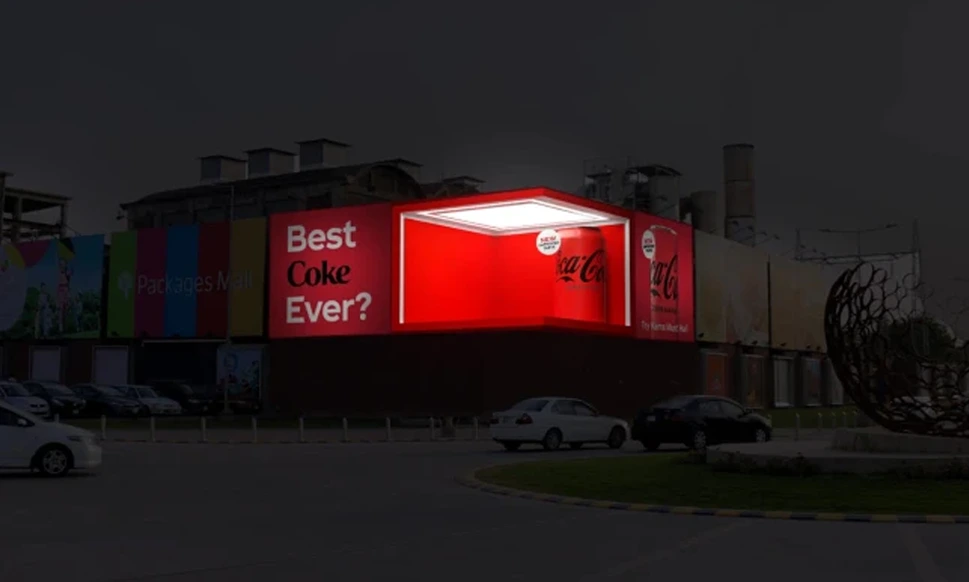
What we just mentioned would be an instance of you coming across a 3D Anamorphic Billboard. It might feel like a thing of the future except it isn’t. 3D billboards that integrate 3D technology, known as anamorphosis or forced perspective to achieve a realistic effect, are already grabbing the attention of millions across major cities of the world such as Tokyo, New York and London. Some have even popped up in Indian cities like Mumbai and Kochi. You might have come across viral videos of the same on the internet.

The novelty of large 3D billboards coupled with a curiosity about the technologies behind them makes viewers spend more time fixated on the advertisement than they would otherwise spend in front of an LED wall.

The Many Advantages of 3D Billboards 

These 3D anamorphic displays are not just mere head-turners, the prospects they unfold often include: 

  1. High Engagement : People don’t just stare at these mega displays, they capture it on their smartphones, share it on social media, and naturally become a topic of conversation.
  2. Media Coverage : Unique 3D campaigns don’t just stay as a topic of conversation between a few, they often end up as talk of the town, which then gets picked up by mainstream media who catapults it even further.
  3. Enhanced Brand Recall : Brands that feature on these innovative media often get a lasting impression on the minds of people – it is not just a random brand on a random display.
  4. Premium Perception : The rarity of 3D billboards naturally shapes a perception in the minds of onlookers that the brands featuring on it must be premium.
  5. Unlocking New Type of Creatives : Brands get the opportunity to incorporate the 3rd dimension of space to tell their story. This opens a wide range of possibilities for content that can’t be done with regular formats.

The India Story of 3D DOOH Ads

While Asian countries like Japan, South Korea and China were the first to embrace this form of Out-Of-Home (OOH) advertisement in its full glory, 3D anamorphic billboards have eventually found their way to Indian cities as well.

This kind of advertising might seem as quite fitting for a market like India where there are numerous cities bustling with scores of people. But it is to be noted that there are also certain factors that deter the widescale adaptation of the same in India.

3D DOOH is Expensive

Traditional billboards with printed visuals and digital billboards featuring thousands of LED modules pale in comparison to 3D anamorphic billboards. They rely on:

  • Ultra-high-definition LED screens, often curved to enhance depth perception
  • Powerful content engines to render 3D animations
  • Specialized 3D content production (planning, design, animation, mathematical calculations, etc.)

This level of complexity makes 3D anamorphic ads so expensive that even prospective clients might doubt the ROI.

Limited Viewability

A fundamental limitation of anamorphic 3D displays is that they rely heavily on perspective. The illusion works only when viewed from a very specific angle. This makes placement absolutely critical.

Now, while cities like New York, Tokyo, or Seoul offer the perfect setup – tall buildings, wide intersections, and heavy pedestrian traffic – most Indian cities present a very different urban landscape. The streets can be narrow, uneven, or overly congested with vehicles rather than walkable pedestrian spaces.

To make the most impact, a 3D billboard ideally needs to be mounted high on a building and positioned at just the right spot where a large number of people can view it from the optimal angle. That kind of setup is tough to find in most Indian cities. As a result, limited viewability becomes a major barrier to wide-scale adoption. 

While the financial and physical aspects of setting up 3D billboards are major challenges for India’s OOH advertising industry, there are a few other hurdles as well. Some of these include:

  • High Maintenance Needs
  • Climate & Environmental Conditions
  • Permits and Licensing Challenges

Does this mean that you won’t be seeing a gigantic 3D cat on a building anytime soon? Not at all! In fact, there are plenty of factors that put India on the path to becoming one of the largest markets for 3D anamorphic advertising technology.
The Impending 3D DOOH Boom in Indian Cities

A fact no one needs reminding of is that India is the world’s most populous country. There are more people to sell to here than anywhere else in the world – and the purchasing power of its citizens is growing rapidly.

More Eyes Than Anywhere Else

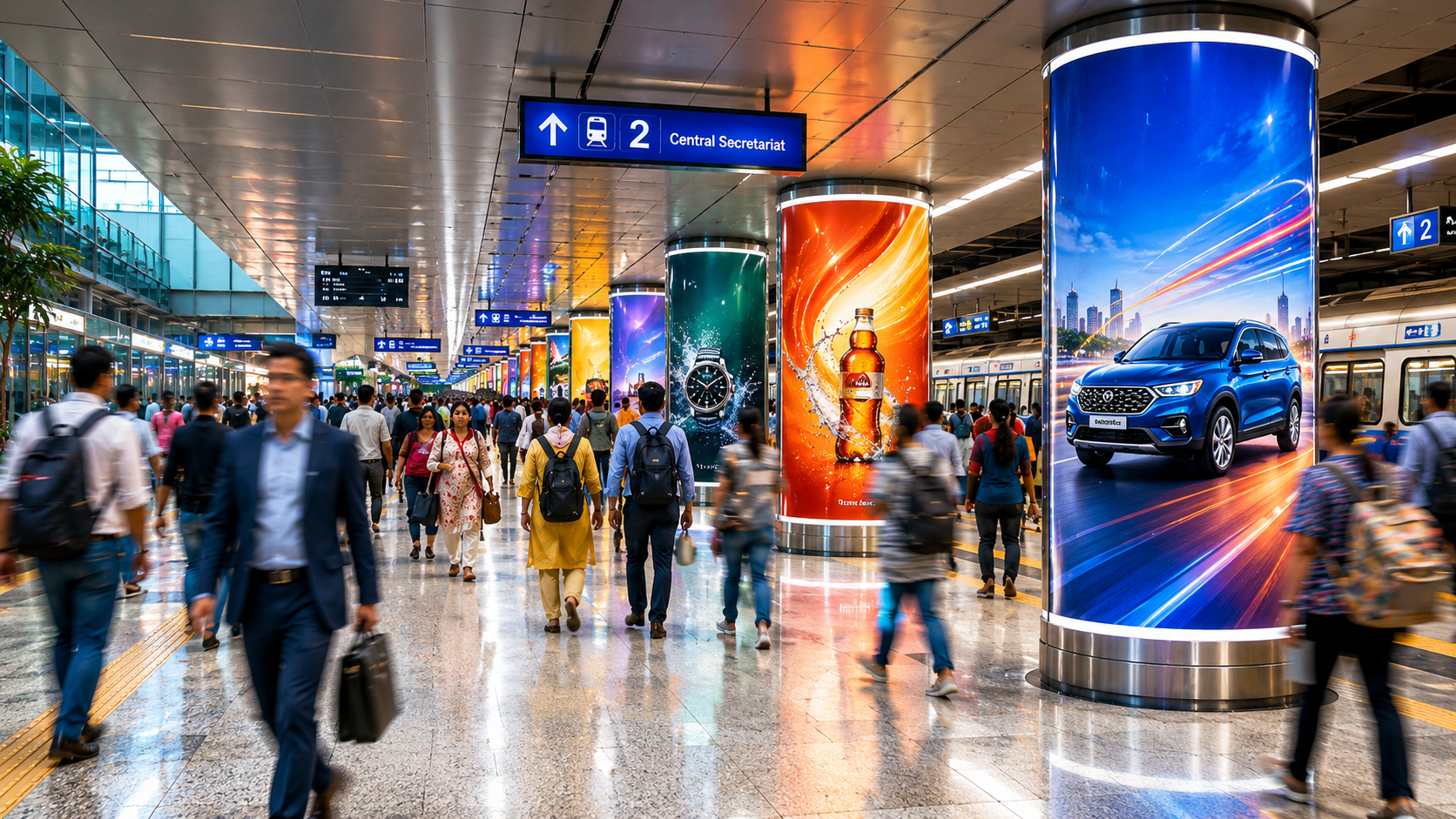
Anamorphic technology-backed DOOH billboards are designed to target large gatherings of people at once—and large crowds are the norm in Indian cities. Yes, the cities themselves struggle with not being particularly pedestrian-friendly. However, this is a well-recognized issue, and recent urban planning efforts have begun addressing it. Many Indian cities are undergoing smart city transformations and this creates opportunities for integrating digital billboards into new urban spaces such as metro stations.

Creative Talent Pool at Home

It’s fair to say that Indians are generally tech-savvy, with a large talent pool of skilled professionals in sectors like VFX, design, and AR/VR. Several large media firms already serve clients across the globe, which means content for 3D billboards can be produced locally. This has the potential to significantly reduce production costs.

A Market Ready for Disruption

Indian brands are increasingly seeking media that breaks the norm and helps them stand out. With its high-impact visuals and immersive appeal, 3D DOOH offers the kind of ‘wow’ factor that’s perfect for product launches, movie promotions, and festival campaigns.

At the same time, major players in the out-of-home advertising space, such as Zero Degree, are actively exploring new technologies to offer clients cutting-edge solutions. Since 3D DOOH is still a budding niche, early adopters have a real opportunity to establish themselves as pioneers, accelerating not just adoption but also innovation in the Indian market.

Conclusion: A Future That’s Almost Here

3D billboards may seem like a futuristic concept that belongs to the skylines of Tokyo or New York, but it’s already knocking on India’s door. Yes, there are challenges – be it cost, placement, or infrastructure – but the potential is far too big to ignore. With a rapidly evolving urban landscape, a tech-savvy creative industry, and brands eager to stand out, India is poised to be a major player in this emerging format.

The gigantic cat and more visuals like that might not be present above every intersection just yet – but if the right steps are taken, it won’t be long before 3D anamorphic billboards decorate Indian cities in numbers. The question isn’t whether India can catch up, but rather – how fast it chooses to leap.


Latest Blogs
Choosing the Right LED Screen Advertising Agency
In today’s fast-moving digital landscape, grabbing attention isn’t optional - it’s essential. The right LED screen advertising agency can turn ordinary spaces into unforgettable brand moments through powerful display branding. Welcome to Zero Degree, the place where outdoor advertising combines with innovation to make ordinary, crowded places into amazing visual spectacles. With the right mix of planning, creativity, and state-of-the-art technology, you can create an advertisement that does more than just get seen - it gets noticed and remembered! Transforming Reach Through LED billboard advertising LED billboard advertising is revolutionizing how brands capture attention, combining dynamic visuals with strategic placement to create unforgettable audience engagement everywhere. -High visibility ensures your brand stands out even in crowded urban environments -Dynamic content allows real-time updates and flexible messaging -Eye-catching visuals improve recall and brand recognition significantly -Targeted locations maximize reach to the right audience segments -Cost-effective over time compared to traditional static billboards With the perfect approach, LED billboard becomes more than promotion and it transforms into a storytelling tool that drives impact and measurable results. Boosting Brand Presence With Display Marketing With a world increasingly influenced by images, display marketing has emerged as the essential element for those seeking to create a brand presence in today’s fiercely competitive marketplaces. -Provides heightened visibility through compelling imagery and effective placement -Creates engaging audiences through cohesive and memorable communication -Increases awareness and conversions It is, indeed, an innovative way to take regular advertising to the next level by creating an immersive experience for your target audience. The Growing Influence of LED advertising In light of the competitive nature of branding, LED advertising is proving to be a revolutionary way of presenting information that has captured the attention of advertisers. The element of motion, lighting, and positioning associated with it make it an ideal strategy to use to grab the viewer’s attention. Final Thoughts Choosing the LED advertising to brand your dream, Zero Degree shapes how effectively your brand connects with its audience in a competitive market. -Focus on strategy, not just visibility -Prioritize creativity and innovation -Leverage data-driven decision making -Ensure consistent brand messaging By aligning with the right partner, your advertising evolves from simple exposure into meaningful engagement that drives lasting impact and measurable growth. FAQ How do I determine if an LED screen advertising agency is right for my     business? Evaluate their strategy, creativity, location reach, technology, and past campaigns to ensure alignment with your business goals. Are there specific questions I should ask an LED screen advertising agency before hiring them? Ask about strategy, target audience, screen locations, content flexibility, performance metrics, pricing structure, and proven campaign results. Why should I choose LED screen advertising for my business? LED screen advertising offers high visibility, dynamic content, better engagement, strong recall, and effective targeting in competitive environments. What is the future of LED screen advertising? The future of LED screen advertising lies in smarter targeting, interactive content, real-time updates, and data-driven campaign optimization. What types of businesses benefit from LED screen advertising? Firms that depend on exposure and customer interaction - retail businesses, property firms, hospitality, health care, education, entertainment, and local services - will get the maximum advantage out of LED screen advertising.
April 28, 2026
Digital Kiosk Display Advertising: The Future of Indoor Marketing
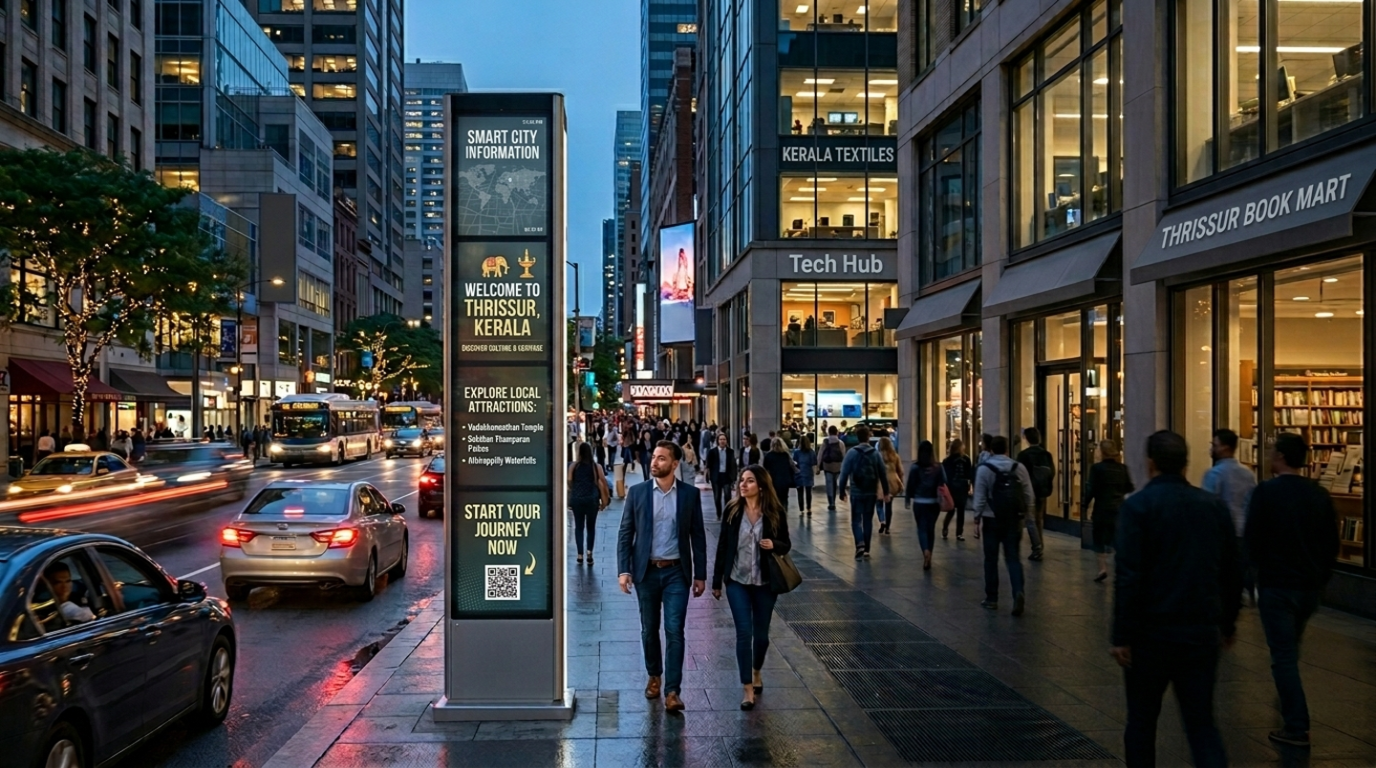
What is transforming the way brands connect with customers inside malls, airports, and retail spaces? The answer lies in digital kiosk display advertising, a modern approach that is reshaping indoor marketing with dynamic and interactive experiences. In today’s fast moving world, traditional static advertisements are gradually being replaced by smarter and more engaging solutions. A digital kiosk display allows businesses to present content in real time, ensuring better visibility and stronger audience engagement. As indoor marketing continues to evolve, these displays are becoming an essential tool for brands looking to stand out in crowded environments. One of the key advantages of this approach is flexibility. Unlike traditional display advertising, digital kiosks allow instant content updates, targeted messaging, and visually rich campaigns. This makes pole kiosk advertising highly effective in high footfall areas where capturing attention quickly is important. Why Digital Kiosk Display Advertising Is Gaining Popularity High Visibility in Indoor Spaces Digital kiosks are placed in strategic locations to maximise reach.a. Attracts instant attentionb. Enhances brand presencec. Increases audience engagementd. Best for retail and public environments Dynamic and Engaging Content Visual content performs better than static displays.a. Captures interest quicklyb. Improves recall valuec. Supports creative storytellingd. Best for promotional campaigns Real Time Content Updates Content can be changed anytime based on needs.a. Instant updatesb. Time based promotionsc. Seasonal campaignsd. Best for offers and announcements Cost Effective Solution Reduces long term advertising costs.a. No repeated printingb. Lower maintenance costsc. Efficient campaign managementd. Best for growing brands Interactive Capabilities Enhances customer experience through engagement.a. Touchscreen featuresb. Product browsingc. Better user interactiond. Best for malls and exhibitions Where Digital Kiosk Advertising Works Best Location - Usage Shopping malls - Promotions and brand awareness Airports - Travel and luxury advertising Corporate offices - Internal communication Retail stores - Product highlights Exhibitions - Interactive engagement Why It Is the Future of Indoor Marketing Digital kiosk display advertising aligns with modern consumer behaviour, where people are naturally drawn to screens and visual content. It strengthens indoor marketing by delivering targeted messages in a more engaging and impactful way. As brands continue to explore innovative display advertising methods, digital kiosks offer the perfect blend of technology, creativity, and convenience. Final Thoughts Digital kiosk display advertising is redefining indoor marketing by combining visibility, flexibility, and engagement in one powerful medium. As businesses move towards more interactive and efficient solutions, digital kiosks provide a seamless way to connect with audiences. Investing in this form of display advertising ensures stronger brand presence and better communication in today’s competitive landscape. FAQ What is digital display advertising? Digital display advertising is the use of visual content such as images, videos, and animations on digital screens or platforms to promote products, services, or brands effectively. What is kiosk advertising? Kiosk advertising refers to displaying promotional content on kiosks placed in high traffic indoor locations to capture attention and engage audiences. What is a digital kiosk? A digital kiosk is an electronic display unit, often equipped with a screen or touchscreen, used to share advertisements, information, or interactive content in public spaces. How does digital kiosk advertising improve indoor marketing? Digital kiosk advertising improves indoor marketing by increasing visibility, enabling real time content updates, delivering engaging visuals, and creating interactive experiences that attract and retain audience attention.
April 22, 2026
Mall Advertising Strategies That Drive Footfall and Sales
Have you ever paused for a moment after noticing an attractive advertisement while strolling through a shopping mall? Well, the truth is, such eye-catching visuals are placed as a part of a tactical digital mall advertising strategy. These placements are carefully planned to engage shoppers while they are already inclined to make a purchase.  Zero Degree Outdoor Advertising Agency excels in creating strategic mall advertising campaigns that drive consumer attention and action. With its extensive footprint across India, we have created and managed result-driven mall advertising campaigns that have successfully garnered high footfall and sales. Why Mall Advertising Still Works In this digital era, mall advertising still matters because of several reasons. 1) High Footfall : High footfall refers to a large number of people visiting a shopping mall or retail store. This is significant since more footfall means that there will be higher brand visibility, customer interaction and consequently, more sales. 2) Exposure Time : Higher dwell time is defined as the duration that shoppers spend inside the shopping mall or the particular zone where mall advertising displays are strategically positioned, enabling the advertisements to remain in the minds of consumers for longer periods of time.  3) Purchase Influence : This aspect deals with the influence a digital mall advertising may have on a person during the last step of the purchasing process. In a mall environment, strategically designed campaigns can encourage customers to make impulsive purchase decisions.  Core Mall Advertising Strategies  1. Strategic Placement in High-Footfall Areas Strategically placing ads in high-footfall zones ensures maximum visibility and recall among shoppers. Entrances, food courts, escalators = maximum visibility Entrance ads can deliver 3–5x higher recall 2. Digital & Dynamic Signage Digital mall advertising displays use motion and brightness to capture attention more effectively than static ads. Motion visuals grab more attention than static ads Enables quick messaging and real-time updates 3. Location-Based & Personalized Marketing Location-based strategies deliver targeted messages to shoppers at the right place and time. Push notifications via mall apps Targets shoppers near the store 4. Visual Merchandising & Storefront Displays Strong visual merchandising attracts attention and drives impulse store visits. Attractive mall advertising display Directly impacts footfall and entry rates Benefits of Mall Advertising Mall advertising offers several key advantages for brands looking to reach more customers effectively. It remarkably increases brand visibility by taking their messages across a larger audience within a confined space. Additionally, it drives qualified footfall by targeting shoppers who are already in a purchase-ready mindset. The interactive setting of the malls improves consumer engagement, while advertising at the right places helps in closing the deal. Final Thoughts At a time when shopping malls are popping up on every nook and corner of the urban landscape, seeing this as an opportunity is a good idea for improving brand visibility. Digital mall advertising comprises a range of dynamic formats such as LED displays and digital screens, that are capable of capturing customer attention. Zero Degree Outdoor Advertising agency specializes in curating mall marketing strategies that convert glances of those casually visiting shopping malls into active customer engagement. Partner with us and take your brand to center stage in major malls across the city. FAQ What are some effective mall advertising strategies to increase footfall? Visual merchandising, storefront window displays, elevator panel advertising and various other technologically advanced forms of mall advertising, are highly effective in attracting audiences. How can mall advertising influence sales? Mall advertising can effectively increase sales since it targets visitors who are already there and inclined to buy. What role does social media play in mall advertising strategies? Social media acts as a bridge between a customer’s online interaction and the actual shopping process. This way it helps in keeping customers engaged. How can data analytics enhance mall advertising effectiveness? Data analytics helps understand people’s behavior and show them ads according to customers' interests. Why is mall advertising important for retail brands? Mall advertising is essential for retail brands as it delivers marketing messages at the point of intent, targeting consumers who are already present in the mall and ready to make a purchase. 
April 22, 2026
How Bus Shelter Advertising Increases Local Brand Visibility
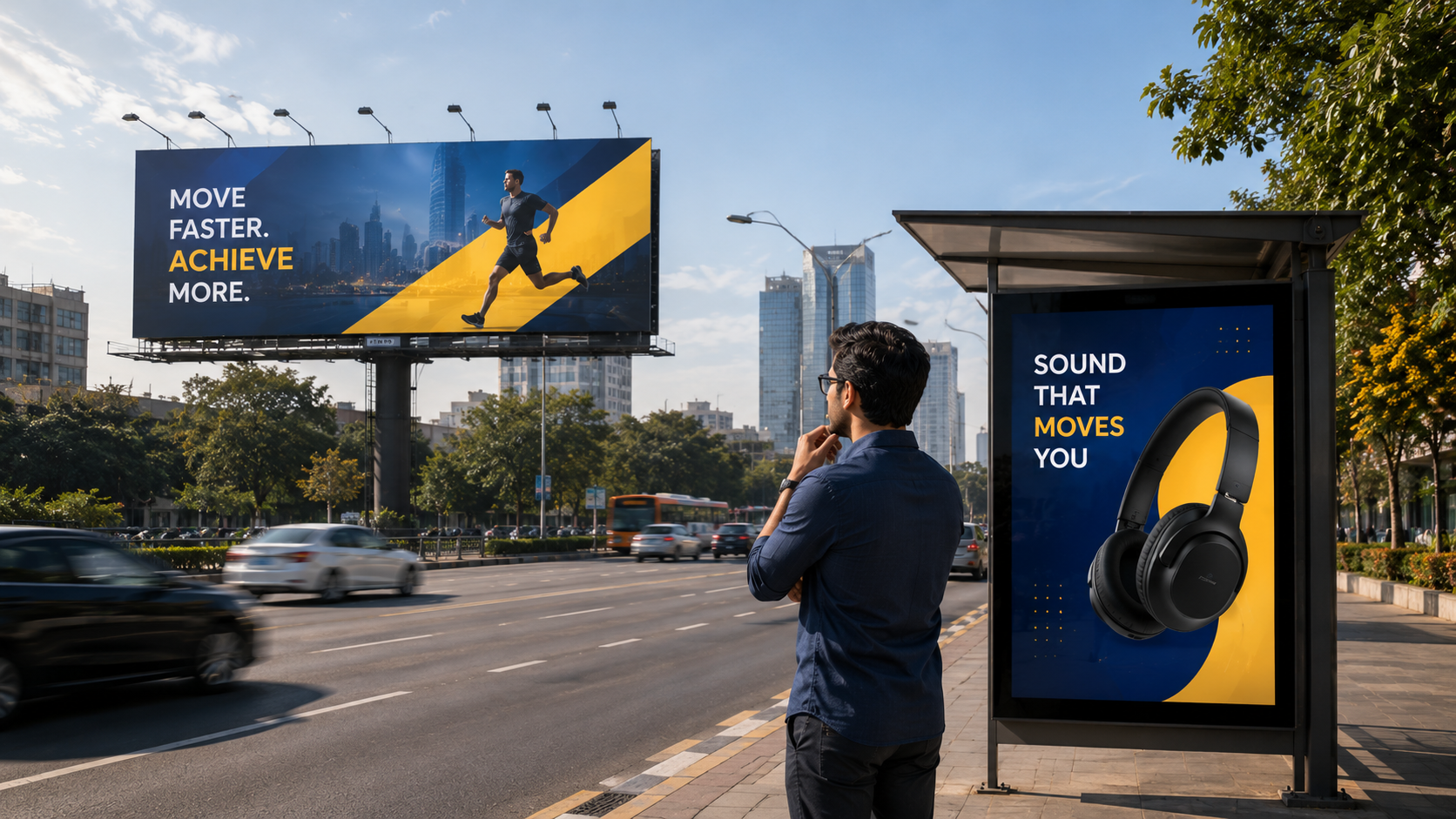
At a time when digital ads can be skipped, having a platform that shows brand messages all day long is an advantage. This is where LED bus shelter advertising comes in. This is where LED bus shelter advertising comes in. These physical structures provide 24/7 exposure and leverage on the minutes commuters spend waiting to deliver brand messages to engage the audience.  Bus shelters serve as more than transit facilities as they function as public spaces which people use throughout their daily lives in both residential and business areas. The continuous presence of advertising in these locations creates a strong impact on how people perceive brands over an extended period since people commute and pass by them repeatedly.  The Everyday Impact of Bus Shelters Bus shelters are part of the city’s daily rhythm. Located in familiar spots, they are seen by commuters morning and evening, with many people spending a few minutes at the same location each day. This regular interaction turns bus shelters into powerful advertising touchpoints within both residential and commercial areas. Bus shelter advertising benefits from: Frequent daily visibility Consistent commuter flow Strong local area connection Eye-level brand placement With repeated encounters in the same setting, brands become more recognizable, helping audiences grow comfortable and familiar over time. Advanced methods such as backlit bus shelter advertising amplify this impact by highlighting messages with its well lit displays. Building Brand Confidence in Busy Urban Spaces City audiences encounter countless ads across digital platforms, billboards, and promotional channels. In such crowded environments, consistent presence plays a key role in shaping perception. When a brand appears regularly in well-used public spaces, it communicates reliability and long-term presence. Bus shelter advertising offers this advantage naturally, delivering steady visibility that helps brands stay familiar, credible, and top of mind. How Bus Shelter Advertising Builds Brand Trust 1) Consistent daily visibility Repeatedly viewing an advertisement makes people familiarize with the brand. This makes it easier for people to remember it.  2) Presence in public infrastructure Bus shelters are a part of people’s daily routines. They either pass by or wait in the area. When a brand is displayed in a trusted public setting, it creates a sense of stability and credibility. 3) Eye-level placement Messages placed at eye level feel more natural and reliable than other formats that cause disruptions. Structures like LED bus shelter advertising is the perfect example of impactful eye level advertising.  4) Longer viewing time Commuters often wait for longer periods. This turns into an opportunity and enables them to absorb detailed brand messages. The Power of Bus Shelter Advertising in High-Footfall Zones The success of advertising in urban areas with high population density depends on two main factors - the number of times ads are shown and how well they can be seen. Major cities consist of bus shelters installed at various points which include active streets, residential areas and business districts. This positioning ensures repeated exposure as commuters pass the same locations during their daily routines. The ongoing visibility that backlit bus shelter advertising provides helps companies to create a stronger brand presence, enabling people to remember them more effectively. People who wait at shelters will spend several minutes inside the closed area, making the messages displayed on the LED screens unskippable. Also, in busy urban areas where people encounter several advertisements, repeated content display creates a stronger impression than showing them multiple ads. Bus shelter advertising takes advantage of this method because it provides continuous visibility, helping people develop brand recognition while keeping brands top of mind. The Growing Impact of Bus Shelter Advertising in India Bus shelter advertising in India is double the impact for brands as a major population of the country rely on public transport for daily commute. Besides, in India people wait for an average of 15–20 minutes in bus shelters which gives them ample time to engage with brand messages or scan QR codes, thus enhancing the brand reach multiple folds. Also, businesses can opt for localized LED bus shelter advertising which allows them to target specific audiences or areas for effective advertising. This way they can pull off campaigns without overspending.  The duration of digital ads ends when people stop scrolling. But, bus shelter advertisements establish permanent visibility which enables people to develop familiarity with the brand put up on them. In major cities with heavy traffic, the bus shelter advertising in India allows brands to maintain visibility despite distractions.  The Lasting Impact of Bus Shelter Advertising Bus shelter advertising delivers uninterrupted visibility where audiences naturally pause and engage. With LED bus shelter advertising and Backlit Bus Shelter advertising, brands gain 24/7 visibility, better brand recall and local reach. In busy urban environments, this consistent presence helps build familiarity, trust and long-term recognition, making bus shelters a practical and impactful medium for increasing local brand visibility.
April 7, 2026